What is furnace blower motor repair?
Blower motor repair fixes the fan system that pushes heated air from the furnace through your ducts. Most blower faults come from a weak capacitor, worn bearings, a dirty wheel or a control part that tells the fan when to run, and a technician can test each one to find which failed.
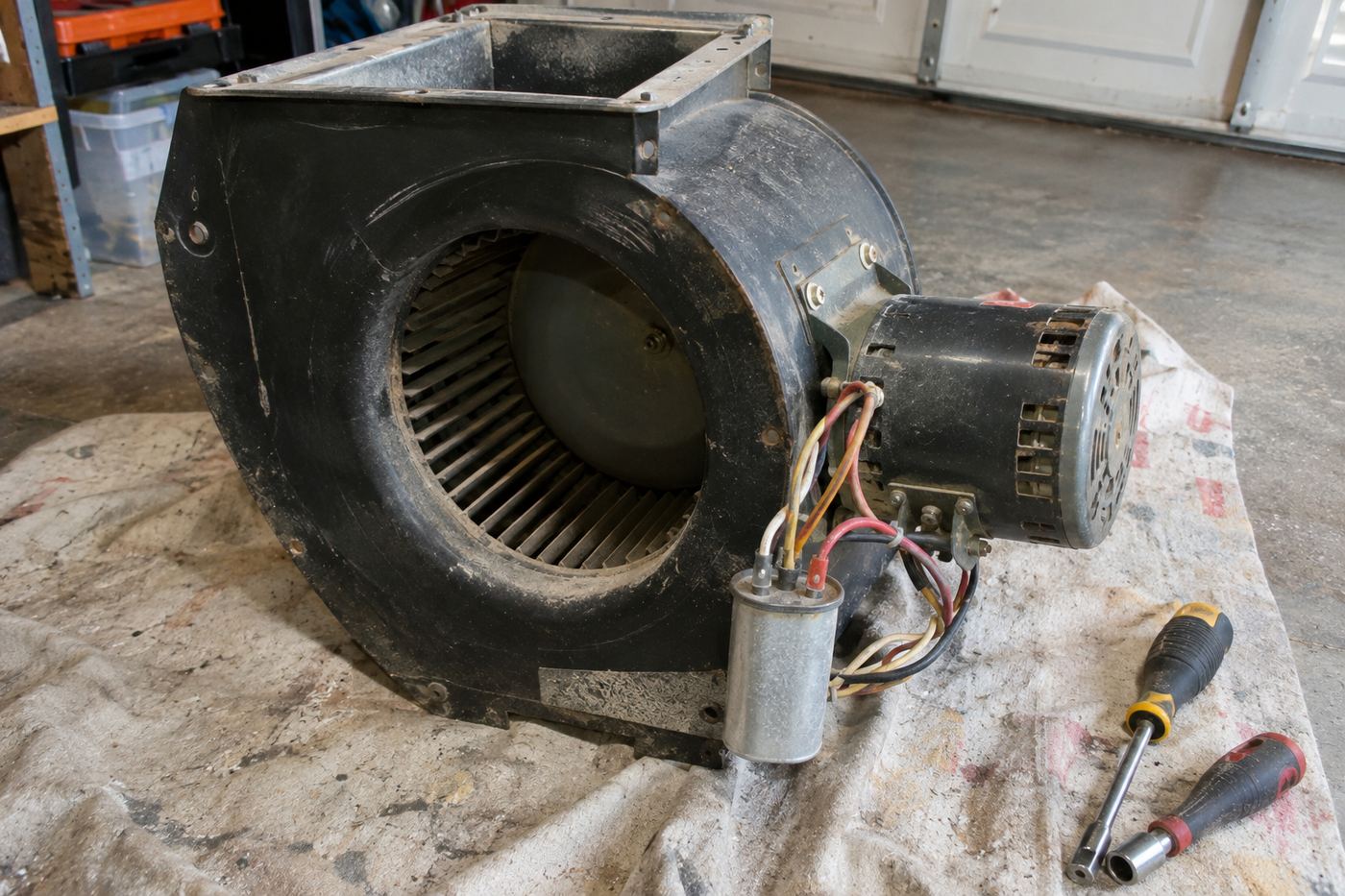
The blower sits in the lower part of most upflow furnaces, below or behind the filter. It is a squirrel-cage wheel driven by an electric motor. Older and standard furnaces usually have a PSC motor that runs at fixed speeds and needs a run capacitor to start and keep turning. Many newer furnaces use a variable-speed ECM motor with its own built-in electronics, which ramps up gently and adjusts its speed to the system.
Because the blower runs every time the furnace heats, and often for cooling too, it puts in more hours than almost any other part in the house. When it slows down or stops, heat builds up inside the furnace with nowhere to go, and the furnace protects itself by shutting off the burners.
How does a technician repair a furnace blower?
The technician first sorts out whether the motor is getting the signal to run. With the furnace calling for heat, they check for voltage at the motor leads from the control board. No voltage points back to the board, a relay or the wiring. Voltage present with no spin points to the motor or its capacitor.
Capacitor. On PSC motors, the run capacitor is the most common failure. It is a small metal can, often oval or round, mounted on the blower housing. A capacitor tester or a meter with a capacitance setting shows whether it still holds its rated value. A swollen or leaking top is an easy visual clue. Replacing a weak capacitor often brings a sluggish motor back to full speed.
Motor. The technician measures amp draw against the motor's label and checks the windings for shorts or opens. They spin the wheel by hand with the power off to feel for rough or tight bearings. On ECM motors, the module and motor are tested with methods specific to that design, since the electronics can fail separately from the motor itself.
Wheel and housing. If the wheel is caked with dust, the blower assembly may need to come out so the fins can be cleaned properly. The technician also checks that the wheel is tight on the shaft and not wobbling, cracked or rubbing the housing.
Controls. A fan that will not stop is usually a control problem rather than a motor problem. The technician checks the thermostat fan setting and wiring, the blower relay on the control board, any separate fan control, and the high limit switch, which keeps the fan running if it senses too much heat.
What are the warning signs of a blower motor problem?
Blower problems tend to show up as changes in how air feels and how the furnace sounds. Look out for these eight signs.
What causes furnace blower problems?
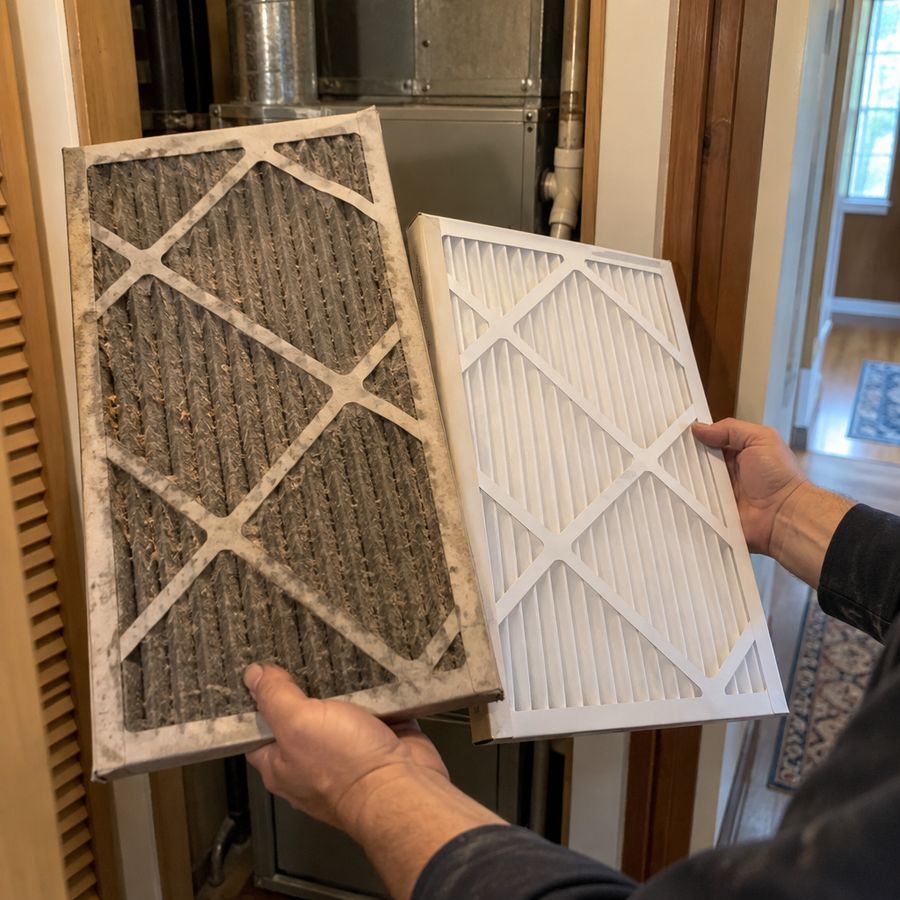
Dust and filters. A blocked filter makes the blower work against a wall of resistance. Dust that slips past a loose or missing filter coats the wheel, and a coated wheel moves less air at the same speed. Both make the motor run hotter and wear faster.
Capacitor wear. Run capacitors lose strength over time, and heat speeds that up. As the value drops, the motor turns more slowly and draws more current until it hums and stalls.
Bearings. Most modern blower motors have sealed bearings that cannot be oiled. Once they dry out or wear, noise and friction rise. Some older motors have oil ports, but many homeowners do not know they are there.
Control faults. A relay on the control board can weld itself closed and keep the fan running. A fan and limit control on older furnaces can drift out of adjustment. A limit switch that trips because of poor airflow will also keep the blower on to cool the heat exchanger, which looks like a fan that "won't stop."
Moisture and age. Furnaces in damp crawl spaces and garages can see rust on motor mounts and wiring terminals, which adds vibration and electrical trouble over time.
What can you check before calling about the blower?
- Set the thermostat fan to Auto, not On, and see whether the blower stops after the heat cycle.
- Replace a dirty filter and confirm the airflow arrow points toward the furnace.
- Open any closed supply registers and move furniture off return grilles.
- Listen near the furnace for a steady hum with no air moving, then switch the furnace off if you hear it.
- Note any burning or electrical smell and tell the provider when you call.
Warning: Capacitors can hold an electrical charge even with the power off. Do not touch the capacitor or blower wiring. Leave testing and replacement to a technician.
What happens during a blower motor repair visit?
- Check the basics. Thermostat fan mode, filter condition and register settings are confirmed first.
- Watch the blower start. The technician notes how quickly the fan spins up and how it sounds.
- Test the capacitor. Its value is measured against the rating printed on the can.
- Measure motor amps and voltage. Readings are compared with the motor label to spot an overloaded or failing motor.
- Inspect the wheel and bearings. The wheel is checked for dust, cracks and play on the shaft.
- Test controls and limits. The blower relay, fan control and limit switch are checked if the fan will not start or will not stop.
- Repair and confirm airflow. After the fix, the technician runs a full cycle and checks the temperature rise across the furnace to confirm proper airflow.
What affects the cost of blower motor repair?
Blower work ranges from a quick part swap to a full motor replacement. The provider quotes after testing, and these factors shape the price.
| Factor | Why it matters |
|---|---|
| Capacitor versus motor | A capacitor is a small part. A full motor replacement means a bigger part and more labor. |
| Motor type | Variable-speed ECM motors and modules generally cost more than standard PSC motors. |
| Wheel cleaning | Pulling the blower assembly to clean a packed wheel adds time. |
| Control repairs | A stuck relay may mean replacing the control board rather than the motor. |
| Access and location | Attic and crawl space furnaces make removing the blower harder. |
When is a blower problem an emergency?
When is it an emergency?
Turn the furnace off at its switch right away if you smell burning wiring, see smoke, or hear a loud grinding that does not stop. A motor that hums without turning can overheat, so it should not be left powered. If the house is cold and someone at home is vulnerable, treat the repair as urgent. If a burning smell comes with a carbon monoxide alarm or a gas smell, leave the house and call 911 or Puget Sound Energy from outside.
A fan that simply runs nonstop is rarely dangerous, but it wastes energy and can hide a limit problem, so have it checked soon.
Why do Bellevue homes see so many blower calls?
With a long heating season on the Eastside, blowers run for months at a time, and many homes also use the same blower for summer cooling. Older ranch houses in Lake Hills often have closet or crawl space furnaces with original ductwork, where dust and tight returns make the blower strain. Bigger homes in Somerset may have long duct runs or several floors, so a weak blower shows up as rooms upstairs that never warm up.
Poor airflow can also make the furnace overheat and switch on and off, which is covered on the short cycling repair page. A yearly furnace tune-up is a good time to test the capacitor and clean the wheel before winter. For any other fault, the main page for Bellevue furnace help lists the common symptoms.
Furnace blower motor FAQs
Why does my furnace hum but the fan does not spin?
A motor that hums without turning usually has a failed run capacitor or seized bearings. Turn the furnace off so the motor does not overheat, and have it tested.
Why will my furnace fan not shut off?
First make sure the thermostat fan is set to Auto, not On. If it is on Auto, a stuck relay on the control board, a faulty fan control or a tripped limit switch can keep the blower running.
Why is the airflow from my vents so weak?
A clogged filter is the most common reason. After that, a dirty blower wheel, a weak capacitor, a motor running at the wrong speed or disconnected ductwork can all cut airflow.
Can a blower motor be repaired or does it need replacing?
Many blower problems are fixed by replacing the capacitor, cleaning the wheel or fixing a relay. When the motor windings or bearings have failed, the motor is usually replaced as a unit.
What is the squealing noise from my furnace?
On older belt-drive blowers, a worn or loose belt can squeal. On direct-drive blowers, a high-pitched noise often comes from dry or worn motor bearings.
Does a dirty blower wheel really matter?
Yes. Dust packed into the fins reduces how much air the wheel moves, which can make the furnace overheat and trip its limit switch, and it adds strain to the motor.
Related furnace services and areas
If the blower runs fine but the air coming out is cold, the problem is on the burner side, so see furnace not heating repair instead.