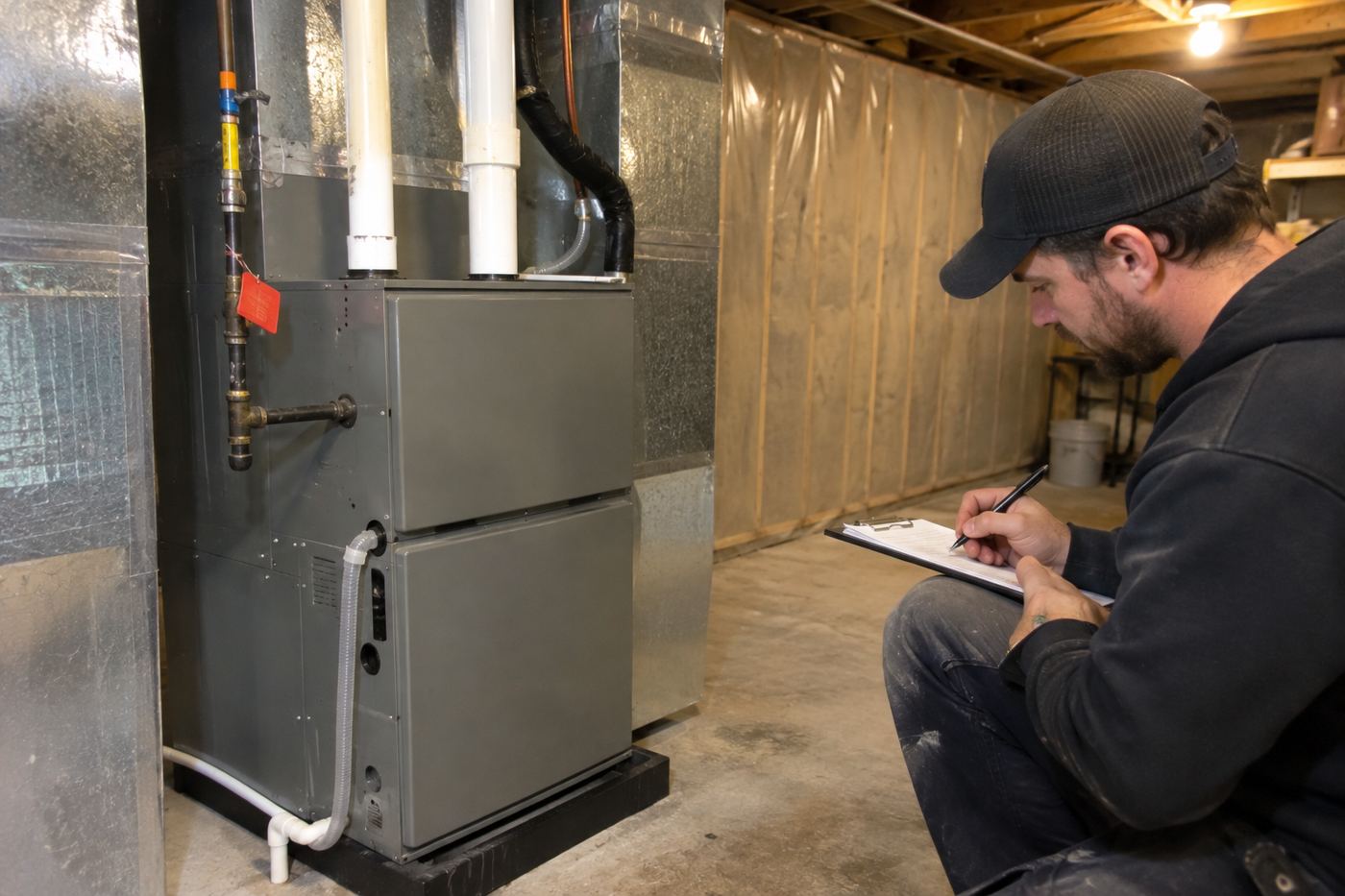
What is a furnace tune-up?
A furnace tune-up is a yearly cleaning, inspection and safety test done while the furnace still works. The goal is to start the heating season with a furnace that lights reliably, burns cleanly and sends exhaust safely out of the house.
Think of it like a pre-trip check on a car. Nothing has to be broken for it to be worth doing. A technician cleans the parts that collect dust and residue, measures how the furnace runs, and looks closely at the parts you cannot see from the closet door, such as the heat exchanger and the inside of the vent connections.
Bellevue sits between Lake Washington and Lake Sammamish, and the climate here is mild but damp, with a heating season that stretches across many months. That long, steady use is exactly why a yearly visit makes sense. A furnace that runs from fall into spring has a lot of hours on its igniter, sensor, inducer and blower by the time the next autumn comes around.
What does a technician do during a tune-up?
Every provider has its own checklist, so ask what is included when you book. A complete tune-up usually covers the combustion side, the airflow side and the safety controls.
On the combustion side, the technician inspects and cleans the burners so the flame spreads evenly, then cleans the flame sensor rod with a fine abrasive pad so the control board gets a strong signal. They check the hot surface igniter for cracks, measure gas pressure at the valve, and watch the flame. Steady blue flames with small, even cones are what they want to see. Lazy, yellow or lifting flames point to dirt, air mix or venting issues.
On the airflow side, the tech checks or replaces the filter, looks at the blower wheel for dust buildup, tests the motor and capacitor, and measures the temperature rise from the return air to the supply air. That rise should fall within the range printed on the furnace label. Too high usually means not enough air is moving. Too low can mean the furnace is not firing fully.
The safety side is the part homeowners care about most. The heat exchanger is inspected with a light or camera for cracks, rust or soot. The vent connector and flue are checked for gaps, rust and proper slope, and on condensing furnaces the PVC pipes, trap and drain are cleared. A combustion analyzer or CO meter reads carbon monoxide in the flue and the air around the furnace. Finally, the high limit, rollout and pressure switches are tested so they will actually shut the furnace down if something goes wrong.
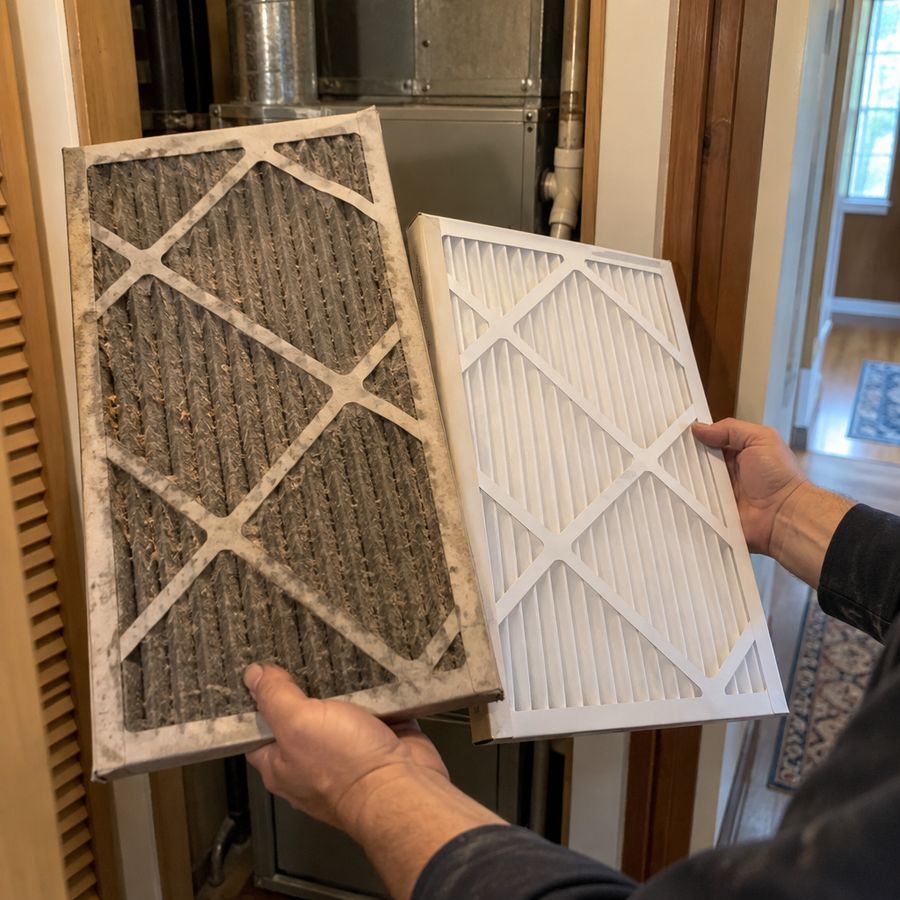
What are the signs your furnace is due for a tune-up?
If you are not sure when the last visit happened, these signs suggest it is time to book one.
Why does a yearly tune-up matter?
Most of the parts a tune-up touches wear slowly. A flame sensor gathers a thin coating each season until the board can no longer read the flame. Burners collect dust and rust flakes that disturb the flame pattern. Blower wheels pick up a layer of grime that cuts airflow a little more each year. None of these fail overnight, which is why they are easy to miss until a cold morning when the furnace will not stay lit.
A tune-up resets those slow problems. It also gives the technician a chance to spot bigger issues early, such as a weak inducer bearing, a capacitor that is drifting out of range, or a drain that is starting to clog. Older closet furnaces in mid-century houses around Lake Hills benefit most from a close heat exchanger and venting check, while condensing furnaces need their trap and PVC pipes cleared so they do not end up needing condensate leak repair in the middle of winter.
Pro tip: Book your tune-up before the first real cold spell. Once the whole Eastside switches the heat on, providers are busy with breakdown calls, and maintenance visits are harder to schedule.
What can you do between tune-ups?
A technician visit covers the parts that need tools and training. These simple habits cover the rest.
- Check the filter every month during heating season and replace it when it looks gray
- Keep boxes, laundry and paint cans at least a few feet from the furnace
- Test CO alarms on every level and replace batteries on schedule
- Keep outside PVC intake and exhaust pipes clear of leaves, needles and snow
- Keep supply registers and return grilles open and uncovered
- Glance at the burner flame through the sight window now and then
Warning: Do not take apart the burner assembly, gas valve or vent connector yourself. These parts control gas flow and exhaust, and a mistake can lead to a gas leak or carbon monoxide in the house.
How does a tune-up visit work step by step?
The order changes from provider to provider, but most visits follow a pattern like this.
- Ask about the furnace. The tech asks about any noises, smells, past repairs or blink codes you have noticed.
- Shut off power and gas as needed. The cabinet is opened safely before any cleaning starts.
- Filter and blower. The filter is checked or replaced, and the blower wheel, motor and capacitor are inspected and tested.
- Burners, igniter and flame sensor. Burners are cleaned, the igniter is checked for cracks, and the sensor rod is cleaned.
- Heat exchanger and venting. The heat exchanger is inspected, and the flue, PVC pipes, trap and drain are checked.
- Run and measure. The furnace is fired up to check gas pressure, flame, temperature rise and CO readings.
- Test the safeties. Limit, rollout and pressure switches are checked so they will shut the furnace down when needed.
- Report back. The provider explains what they found and gives a written quote for any repairs before doing them.
What affects the cost of a furnace tune-up?
Providers set their own rates. These are the things that most often change the total.
| Factor | Why it matters |
|---|---|
| Furnace type | Condensing furnaces add a trap, drain and PVC venting to clean and inspect. |
| Access | A furnace in a crawl space or attic takes more time than one in a garage or closet. |
| Filter type | Thick media filters and specialty sizes cost more to replace than a standard filter. |
| Condition | A furnace that has gone years without service may need extra cleaning time. |
| Repairs found | Parts that fail testing are quoted separately from the tune-up itself. |
| Maintenance plans | Some providers offer yearly plans. Ask what is included before signing up. |
When is it more than a tune-up?
When is it an emergency?
Do not wait for a scheduled tune-up if your CO alarm goes off, you smell gas, you see flames rolling out of the burner area, or there is soot around the furnace. Leave the house and call 911 or Puget Sound Energy from outside, and do not flip light switches on the way out. A furnace that will not heat at all in freezing weather also needs a repair call, not a maintenance visit.
If the technician finds a cracked heat exchanger or a CO reading that is too high, they may shut the furnace off and tag it as unsafe. Ask them to show you what they found and explain your options.
Furnace tune-up questions
How often should a furnace get a tune-up?
Once a year is the common advice, ideally in late summer or early fall before the heating season starts. Many furnace makers also call for regular maintenance in their warranty terms, so check your paperwork.
What is the difference between a tune-up and a repair?
A tune-up is planned maintenance on a furnace that is still working. A repair fixes something that has already failed. A tune-up can turn up parts that need repair, and the provider should tell you before doing any extra work.
Does a tune-up include a carbon monoxide test?
A thorough safety check usually includes a CO reading in the flue and near the furnace, plus a look at the venting. Ask the provider what their tune-up covers before the visit.
My furnace is new. Does it still need a tune-up?
Yes. New furnaces still collect dust on the flame sensor and burners, and condensing models have drains that can clog. Regular maintenance also helps keep manufacturer warranties in good standing.
How long does a furnace tune-up take?
It varies with the furnace type, how easy it is to reach and what the technician finds. A furnace in a tight crawl space or attic takes longer than one in a garage or closet.
What should I do between tune-ups?
Check the filter monthly in heating season, keep the area around the furnace clear, test your CO alarms, keep outside vent pipes free of leaves and snow, and pay attention to new noises or smells.
Related furnace services and areas
If the tune-up turns up a weak igniter or a dirty sensor, the igniter and flame sensor repair page explains what comes next. Homes on the wooded lots of Bridle Trails should pay extra attention to outside vent pipes in leaf season. For every furnace service in one place, head back to Blue Flame Heating.