What does gas furnace repair cover?
Gas furnace repair covers the parts that bring gas in, burn it, and send the exhaust safely outside: the gas valve, burners, igniter, draft inducer, pressure switch and vent pipes. A trained technician fixes the failed part and then checks flame quality, gas pressure and venting before the furnace goes back into service.
A gas furnace is really two systems in one cabinet. The combustion side makes heat and sends exhaust out through a flue or plastic pipes. The air side pushes house air across the heat exchanger and back into the rooms. Gas furnace repair focuses on the combustion side, which is where the safety stakes are highest, because a problem there can affect carbon monoxide levels as well as comfort.
Most Bellevue homes heat with natural gas supplied by Puget Sound Energy, so these furnaces are everywhere, from older standard-efficiency units with metal flues to high-efficiency models vented through white PVC pipes on the side of the house.
How does a technician repair a gas furnace?
Gas work starts with a safety mindset. Before touching anything, a careful technician looks for signs of gas leaks around the valve and fittings, checks for scorch marks on the burner compartment, and notes the flame through the sight glass if the furnace is running. Then they move through the combustion parts in order.
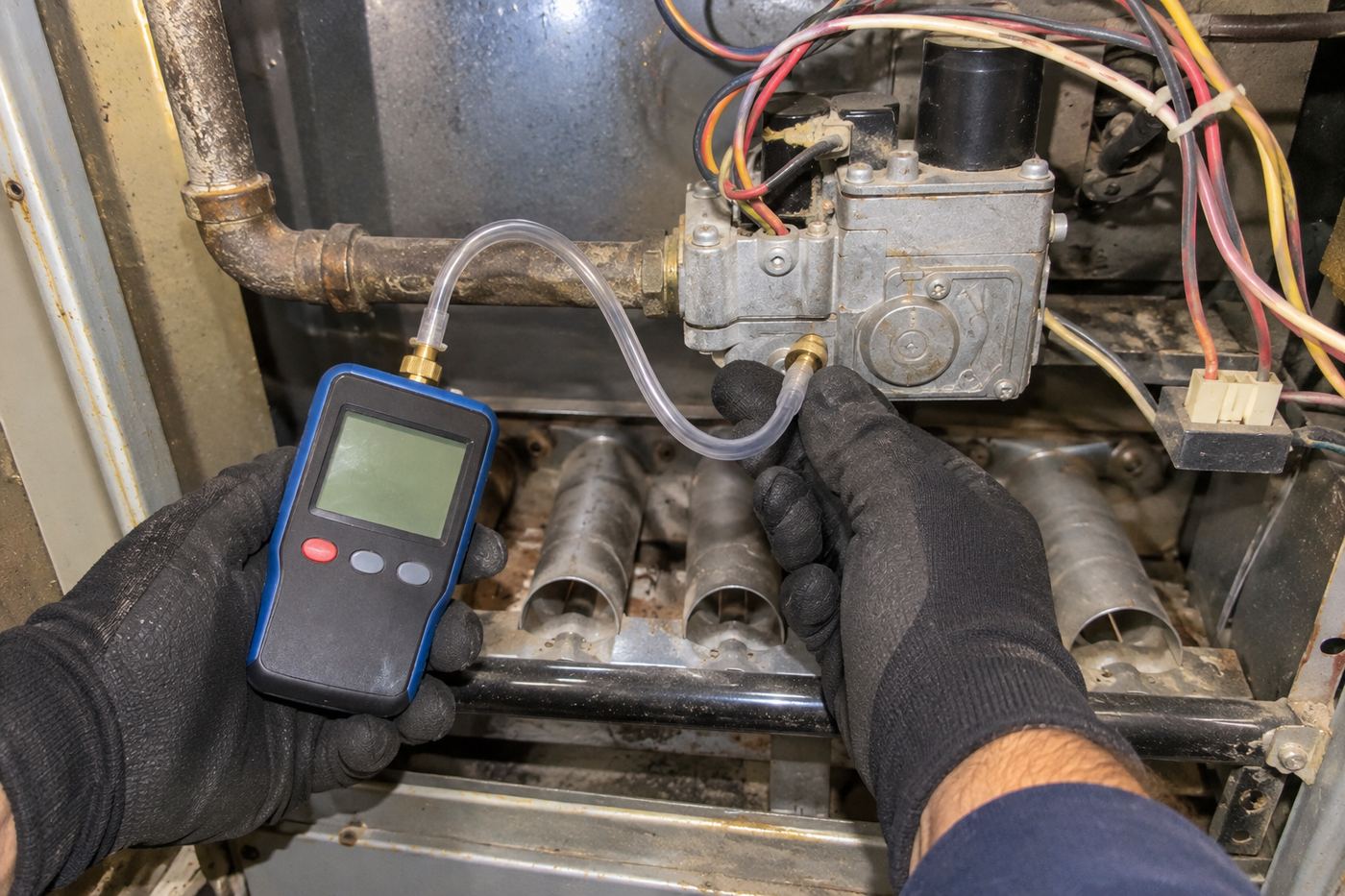
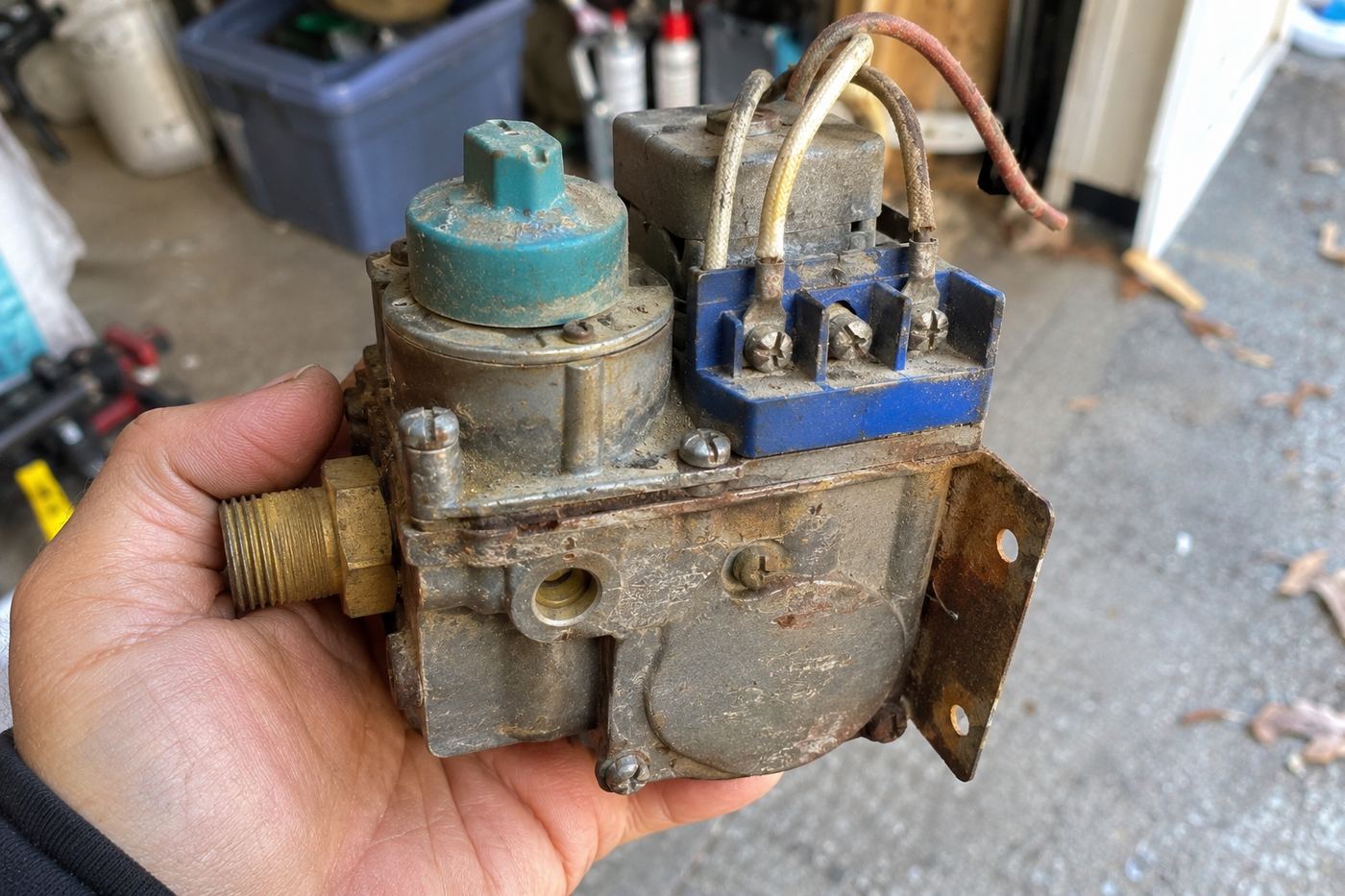
Gas valve. The technician confirms the valve gets 24 volts when the board calls for gas, then measures inlet and manifold pressure with a manometer. A valve that has voltage but does not open, or that holds the wrong pressure, is replaced. Older valves like those on floor furnaces may need a matching modern replacement, set and leak-tested on site.
Burners. Rust flakes, dust and spider webs can block burner ports and throw the flame out of shape. Burners are pulled, brushed or cleaned, and checked for cracks. Clean burners carry flame smoothly from one to the next, which prevents the delayed ignition bang some homeowners hear.
Draft inducer and pressure switch. The inducer pulls exhaust through the heat exchanger and out the vent. The pressure switch proves that draft is there before ignition is allowed. A technician tests the inducer's amp draw, listens for worn bearings, and checks the switch and its rubber hose with a manometer.
Venting. Metal flues are checked for rust, gaps and proper slope. Plastic pipes are checked for sags that trap water, blocked screens and loose joints. On every job, the last step should be a combustion and carbon monoxide check near the flue and in the living space.
What are the warning signs of a gas furnace problem?
Gas furnaces tend to show trouble through flame color, sounds, smells and the way they start. Watch for these eight signs.
What causes gas furnace problems?
Gas furnaces break down in a fairly predictable set of ways. Dust and rust settle on burners over a long heating season and distort the flame. Gas valve coils wear out and stop opening, or the valve drifts off its set pressure. Inducer motors run every cycle, so their bearings eventually wear and the motor slows, hums or seizes.
Venting is its own category. Plastic vent pipes can sag between hangers and hold water, which blocks draft. Birds and insects build nests in uncapped flues. On cold, damp nights, frost can build on the intake screen of a high-efficiency furnace. Leaves and needles are common culprits too, especially on wooded lots in Bridle Trails where vents sit close to shrubs and shade.
Finally, there is the heat exchanger. Years of heating and cooling can crack the metal. A cracked exchanger lets combustion gases mix with house air and is a serious finding, not a routine repair.
What can you check on a gas furnace yourself?
Homeowners should leave gas parts alone, but there are safe things to look at before calling.
- Make sure the gas shutoff handle on the pipe to the furnace is parallel to the pipe (open).
- Check that other gas appliances, like the stove or water heater, still work. If none do, the supply may be the issue.
- Look through the sight glass while the burners run and note the flame color.
- Clear snow, frost or leaves from outside intake and exhaust pipes by hand.
- Test your carbon monoxide alarms and replace dead batteries.
Warning: Never adjust a gas valve, remove burners or try to light a modern furnace by hand. If you smell gas at any point, leave the house, call 911 or Puget Sound Energy from outside, and do not flip any switches on the way out.
What happens when a technician works on your gas furnace?
A gas furnace visit should feel methodical. Expect steps like these, though each provider has its own routine.
- Safety check on arrival. A quick sniff test and a leak check at the valve and fittings before work starts.
- Observe a full cycle. The technician watches the inducer, ignition, flame and blower in sequence.
- Measure gas pressure. A manometer on the valve confirms inlet and manifold pressure are where the furnace label says.
- Inspect burners and heat exchanger. Burners are checked for rust and alignment, and the exchanger is looked at for cracks or scorching.
- Test inducer and pressure switch. Amp draw, bearing noise and switch closing pressure are all checked.
- Repair and leak test. Any gas connection opened during the repair is tested with leak solution or a detector.
- Combustion and CO check. The final step confirms safe venting and a clean flame before the technician leaves.
What affects the cost of a gas furnace repair?
The provider gives you a price after the diagnosis. These are the things that usually make a gas repair larger or smaller.
| Factor | Why it matters |
|---|---|
| Which part failed | Cleaning burners is light work. A gas valve or inducer motor replacement takes a part and more labor. |
| Venting work needed | Re-hanging a sagging PVC pipe is different from rebuilding a rusted metal flue run. |
| Furnace age and model | Older and less common furnaces may need adapted or special-order parts. |
| Safety testing | Leak tests, pressure setting and combustion checks add time but are part of doing gas work properly. |
| Heat exchanger condition | A crack moves the talk from repair toward replacement. |
When is a gas furnace problem an emergency?
When is it an emergency?
Treat it as an emergency if you smell rotten eggs, hear hissing near a gas line, see flames rolling out of the burner area, or your carbon monoxide alarm goes off. Leave the house with everyone, including pets. Call 911 or Puget Sound Energy from outside, and do not switch lights on or off or use the garage door opener on the way out. After the utility or fire department clears the house, get a gas furnace technician in before using it again.
A loud bang at start-up or heavy soot is not always an evacuation situation, but it does mean the furnace should be shut off at its switch until someone looks at it.
What makes gas furnace work in Bellevue different?
The Eastside's mild, wet winters mean furnaces fire many times a day for months. That steady cycling wears inducer bearings and coats burners faster than people expect. Moisture adds rust in garages and crawl spaces, which is common in homes around Factoria where furnaces often sit in garages near the outside air.
An inducer that strains or a pressure switch that will not close can also make the furnace start and stop over and over, which overlaps with short cycling and inducer repair. For a wider look at every type of fault, the main Bellevue furnace repair page lists the common symptoms in one place.
Gas furnace repair FAQs
What color should my furnace flame be?
A healthy gas flame is mostly blue with a crisp inner cone. A few orange flecks from dust are common, but a lazy yellow or orange flame points to poor combustion and should be checked by a technician.
What should I do if I smell gas near the furnace?
Leave the house right away. Do not switch lights or appliances on or off. Call 911 or Puget Sound Energy from outside, and do not go back in until they say it is safe.
Can a gas valve be repaired or does it need replacing?
Gas valves are not repaired inside. If a valve fails to open or will not hold pressure, it is replaced, then set to the right pressure and leak-tested before the furnace runs again.
Why does my gas furnace make a loud bang when it lights?
A bang usually means delayed ignition. Gas builds up before it lights, often because of dirty burners or a weak igniter. Turn the furnace off and have it checked, since repeated bangs can stress the heat exchanger.
Why does the inducer motor run but the burners never light?
The pressure switch is not proving a clear vent. A blocked or frosted pipe, a cracked switch hose, a plugged condensate trap or a weak inducer can all cause it.
Is my older gas furnace worth repairing?
Often yes, when one part has failed and the heat exchanger is sound. Ask the provider about part availability and the condition of the heat exchanger before deciding.
Related furnace services and areas
Gas problems often sit next to other faults. If the furnace will not light at all, start with furnace not heating repair. A yearly furnace tune-up and safety check catches dirty burners and weak inducers before they stop the heat.