What is igniter and flame sensor repair?
Igniter and flame sensor repair fixes the two small parts that start the fire in a gas furnace and prove it is burning. When the burners light and drop out, or only catch on some tries, one of these parts is almost always the cause, and a technician can test both in a few minutes.
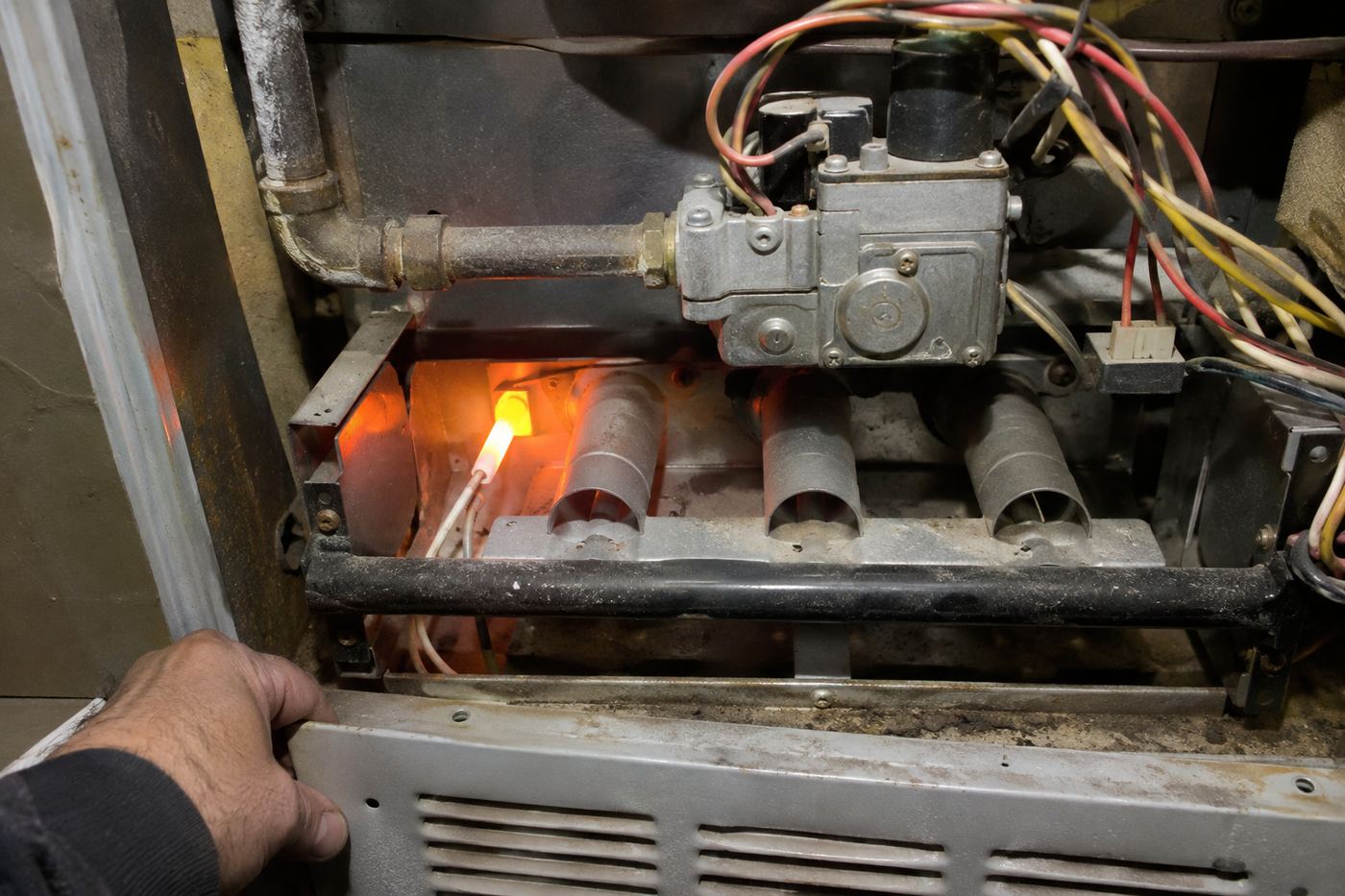
Most gas furnaces built in recent decades use a hot surface igniter, a small ceramic element that glows bright orange like a stove coil. Once it is hot, the gas valve opens and the burners light. Right next to the flame sits the flame sensor, a thin metal rod. The flame carries a tiny electrical current through that rod back to the control board. If the board does not see that current within a few seconds, it shuts the gas off.
That safety design is a good thing. It stops raw gas from flowing into a furnace that has not lit. But it also means a part smaller than your finger can stop the whole furnace, which is why ignition faults are among the most common heating calls in Bellevue each winter.
How does a technician repair ignition problems?
The technician begins by watching the furnace try to start. They note whether the igniter glows, how long it takes the burners to catch, and how long the flame lasts before it goes out. That one observation usually splits the problem in two: either the fire never starts (an igniter or gas valve issue) or it starts and is not proven (a flame sensor issue).
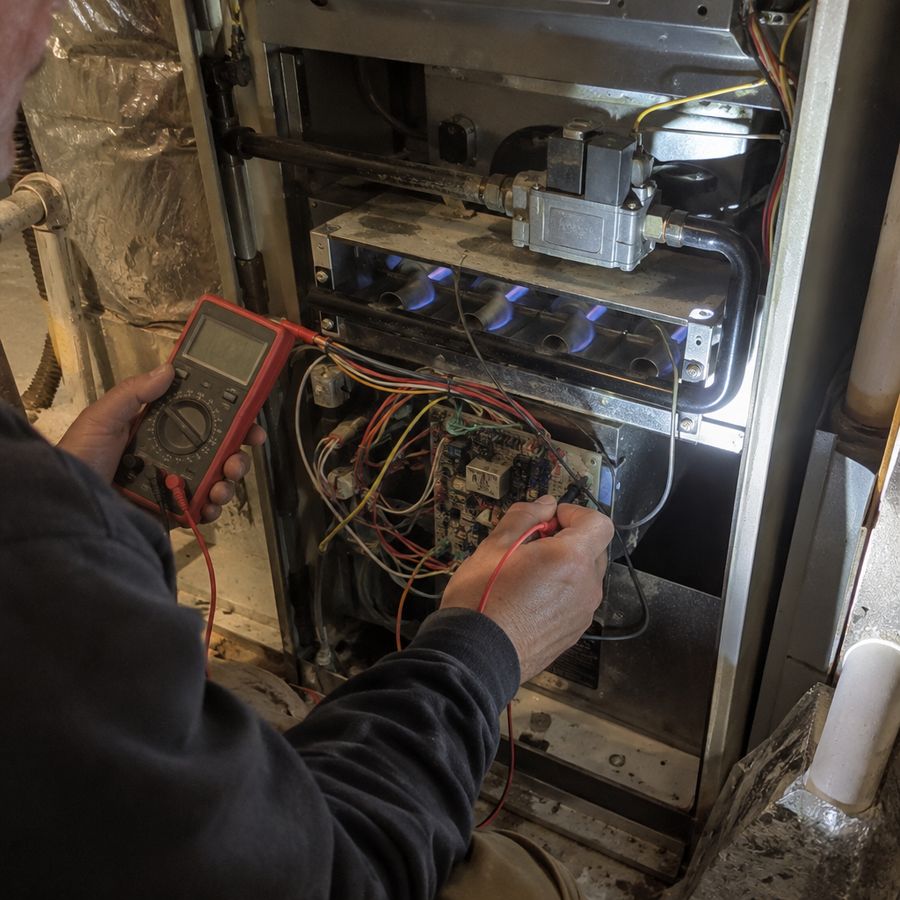
For the igniter, the test is resistance. With the power off, a multimeter across the igniter leads shows whether the element is whole. A cracked or burned-through igniter reads open or far out of range. Even an igniter that still reads fine can show a hairline crack or a white, chalky spot under a flashlight, both signs it is close to the end. Replacement means matching the right igniter type and handling the new one by its base only, because oils from skin can shorten its life.
For the flame sensor, the technician puts a meter in series with the sensor wire and reads the flame signal in microamps while the burners run. A low or falling reading usually means the rod has a coating from combustion. Light cleaning with a fine abrasive pad removes it. If cleaning does not raise the signal, they check the sensor's position in the flame, the ceramic insulator for cracks, the wire, and the furnace ground, because a poor ground weakens the signal just as much as a dirty rod.
What are the warning signs of a bad igniter or flame sensor?
Ignition faults have a distinct pattern. If several of these sound familiar, the start-up sequence is where the trouble lives.
What causes igniters and flame sensors to fail?
Igniters wear out through heat. Every start heats the ceramic to a very high temperature and then lets it cool, and over many cycles that stress opens tiny cracks. A furnace that short cycles burns through igniters faster, because it starts far more often than it should. Voltage spikes, a bump during filter changes, or touching the element with bare fingers can also shorten igniter life.
Flame sensors fail more slowly. Combustion leaves a thin layer on the rod, and dust pulled in from the house adds to it. Over a long heating season the signal drops a little at a time until one cold morning it falls below what the board needs. Cracked porcelain, a loose wire terminal or a corroded ground connection can produce the same result. In damp garages and crawl spaces, corrosion on those connections is a real factor.
Less often, the real problem is upstream. A gas valve that opens slowly, low gas pressure or a pressure switch that closes late can all look like an ignition fault at first glance.
What can you check before calling for ignition repair?
You can gather useful clues without opening the burner compartment.
- Watch through the sight glass during a start and note whether you see an orange glow.
- Count how many seconds the flame stays lit before it drops out.
- Write down the status light blink pattern before turning anything off.
- Replace a dirty filter, since overheating and short cycling wear igniters out.
- Check that the furnace door is fully closed so the safety switch is pressed.
Pro tip: If you reset the furnace and it runs fine for a day before failing again, tell the provider. That on-and-off pattern points toward a weakening flame signal rather than a dead part, and it helps the technician plan.
What does the technician do during an ignition repair visit?
- Listen to the history. How often it fails, whether resets help, and any recent changes like a new filter or thermostat.
- Read the fault history. Many control boards store recent codes, which show whether flame or ignition failures repeat.
- Watch a start. The technician times the igniter warm-up, the gas valve opening and how long flame lasts.
- Measure the igniter. Resistance and a close visual check for cracks or white spots.
- Read the flame signal. A microamp reading shows whether the sensor is proving the flame reliably.
- Clean or replace. The sensor is cleaned if it responds. A failing igniter is swapped for the correct type. You get a price before parts go in.
- Run repeat cycles. Several starts in a row confirm ignition is quick and steady.
What affects the cost of igniter and flame sensor repair?
These are usually among the smaller furnace repairs, but the final quote still depends on a few things.
| Factor | Why it matters |
|---|---|
| Clean or replace | Cleaning a flame sensor is a short job. Replacing an igniter adds the cost of the part. |
| Igniter type | Some furnaces take a universal igniter, while others need a specific brand part. |
| Intermittent faults | A furnace that fails once a day can take longer to catch in the act. |
| Related problems | If short cycling is wearing igniters out, fixing that cause may be part of the job. |
| Pilot-style systems | Older standing pilot furnaces use a thermocouple instead, which has its own parts and labor. |
When is an ignition problem an emergency?
When is it an emergency?
An igniter or sensor fault by itself is not dangerous, because the furnace shuts the gas off when it fails. It becomes urgent when the house is getting cold for someone vulnerable, or pipes are at risk. It is a safety emergency if you hear a loud bang at light-off, smell gas, or the carbon monoxide alarm sounds. If you smell gas, leave the house, call 911 or Puget Sound Energy from outside, and do not switch anything on or off.
If the furnace keeps cycling through failed starts, turn it off at its switch so the board stops trying, and call to get it looked at.
Why do ignition faults show up so often in Bellevue?
Long, damp heating seasons mean a lot of start-ups. Larger hillside homes in Somerset often have bigger furnaces or zoned systems that start many times a day, and each start is one more heat cycle for the igniter. In townhomes and closets around Crossroads, tight spaces and dusty return air coat flame sensors faster.
When a furnace will not start at all, the cause may sit outside the ignition system, so it is worth reading about furnace not heating repair as well. If the burners light fine but the furnace stops and starts every few minutes, the problem is more likely short cycling. Either way, a call gets you connected with furnace repair across Bellevue.
Igniter and flame sensor FAQs
Why does my furnace light and then shut off after a few seconds?
The control board is not seeing a strong enough flame signal, so it closes the gas valve for safety. A dirty or loose flame sensor is the most common reason, followed by a poor ground or a weak flame.
Can I clean the flame sensor myself?
Some handy homeowners do, with the power and gas off, using a fine abrasive pad. If you are not comfortable removing parts inside the burner compartment, leave it to a technician, who can also measure the signal afterward.
How do I know if my igniter is bad?
If the inducer runs but you never see the igniter glow orange through the sight glass, the igniter may be cracked or burned out. A technician confirms it by measuring its resistance.
Why does my furnace only light some of the time?
An igniter that is close to failing may glow too weakly to light the gas on every try. A slow pressure switch or a sticking gas valve can also cause hit-or-miss ignition, so each part should be tested.
Should I replace the igniter and flame sensor together?
Not always. A flame sensor can often be cleaned and reused. Ask the provider whether the igniter shows wear, since replacing a tired one during the same visit can avoid a second trip.
Do older furnaces have an igniter?
Many older furnaces use a standing pilot light and a thermocouple instead. The repair idea is similar: a technician checks that the pilot stays lit and that the thermocouple holds the gas valve open.
Related furnace services and areas
Ignition faults often share symptoms with gas supply and venting problems, which are covered on the gas furnace repair page.