What does it mean when a furnace is not heating?
A furnace that is not heating has broken down somewhere in its start-up sequence, so either the burners never light or they light and shut off again. In most Bellevue homes the cause is one part, such as the flame sensor, the igniter, the filter or the thermostat, and a technician can find it with a few tests.
Every gas furnace follows the same order each time the thermostat calls for heat. The draft inducer starts, a pressure switch confirms the vent is clear, the igniter glows, the gas valve opens, the flame sensor proves there is fire, and finally the blower pushes warm air into the ducts. If any step fails, the control board stops the sequence for safety. That is why "no heat" can look so different from one house to the next.
Some homeowners notice cold air coming out of the registers. Others hear clicks and a hum, then silence. A few find the furnace completely dead with no lights on the board. Each of those clues points a technician toward a different stage of the sequence, so it helps to notice exactly what happens before you call.
How does a technician fix a furnace that won't heat?
The repair starts with diagnosis, not parts. A good technician watches one full call for heat from the start, because the moment the sequence stops tells them where to look. If the inducer never spins, the problem sits at the board or the inducer itself. If the igniter glows but no flame appears, the gas valve or gas supply comes next. If flame appears and then drops out after a few seconds, the flame sensor is the prime suspect.
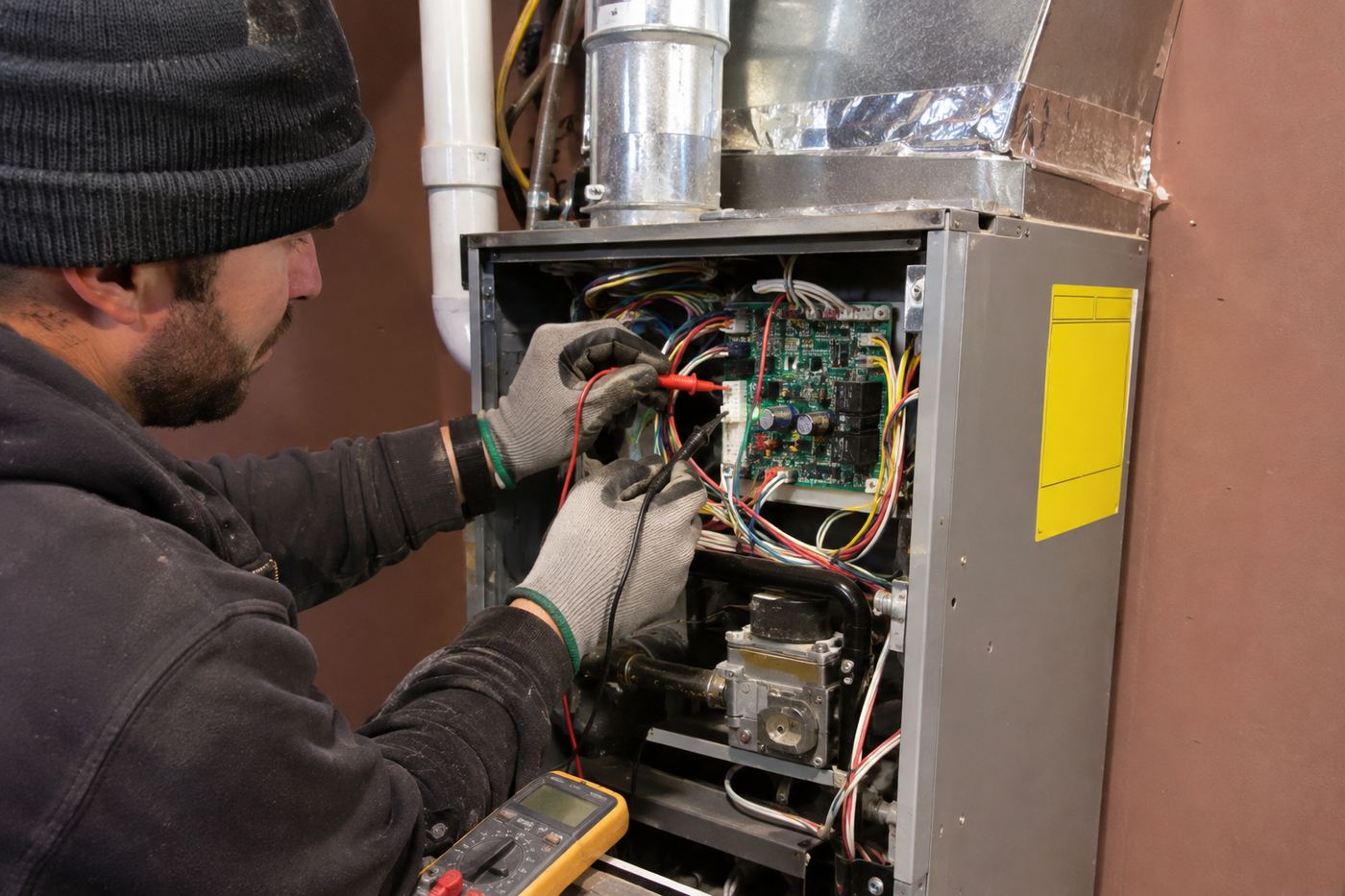
Most of the testing is done with a multimeter. The technician checks for 120 volts at the furnace, 24 volts from the transformer, and a heat signal on the thermostat wire. They measure the resistance of the hot surface igniter, read the flame sensor's microamp signal, and confirm the pressure switch closes when the inducer runs. On the gas side, they may check inlet and manifold pressure with a manometer.
Once the failed part is found, the fix is usually direct. A flame sensor can often be cleaned with a fine abrasive pad. A cracked igniter, a burned-out inducer, a weak transformer or a shorted thermostat wire gets replaced. If the furnace shut down on an overheat limit, the technician also hunts for the reason, such as a packed filter, closed registers or a failing blower. Fixing the limit trip without fixing the airflow only brings the same call back a week later.
Before leaving, the technician should run the furnace through several complete cycles and measure the supply air temperature. That final check proves the heat is back and stable, not just working for one run.
What are the warning signs of a furnace that is failing to heat?
Furnaces rarely quit without giving some clues first. These eight signs are the ones Bellevue homeowners describe most often when the heat starts to slip.
One sign on its own might be a simple setting. Two or three together, such as a blinking light and cold air, almost always mean a part has failed.
What causes a furnace to stop producing heat?
The list of possible causes is long, but a handful account for most no-heat calls during a damp Eastside winter.
- Thermostat problems. Dead batteries, a wrong mode, a loose wire or a smart thermostat that lost its power connection.
- Dirty flame sensor. A thin coating on the rod weakens its signal, so the board shuts the gas off seconds after lighting.
- Failed hot surface igniter. These ceramic parts crack with age and simply stop glowing.
- Overheat lockout. A clogged filter or blocked return lets heat build up until the high limit trips.
- Pressure switch or inducer fault. A blocked vent, a frosted intake or a weak inducer keeps the switch from closing.
- Gas supply or gas valve. A closed shutoff, a supply interruption, or a valve coil that no longer opens.
- Electrical faults. A tripped breaker, a blown 3-amp board fuse, a failed transformer or a door safety switch that is not pressed in.
Ignition parts get their own detailed page. If your symptom is burners that light and shut off, our guide to igniter and flame sensor repair walks through that sequence step by step.
What can you safely check before calling?
A few simple checks solve a surprising number of no-heat calls, and they cost nothing. Work through them in this order and stop if anything feels unsafe.
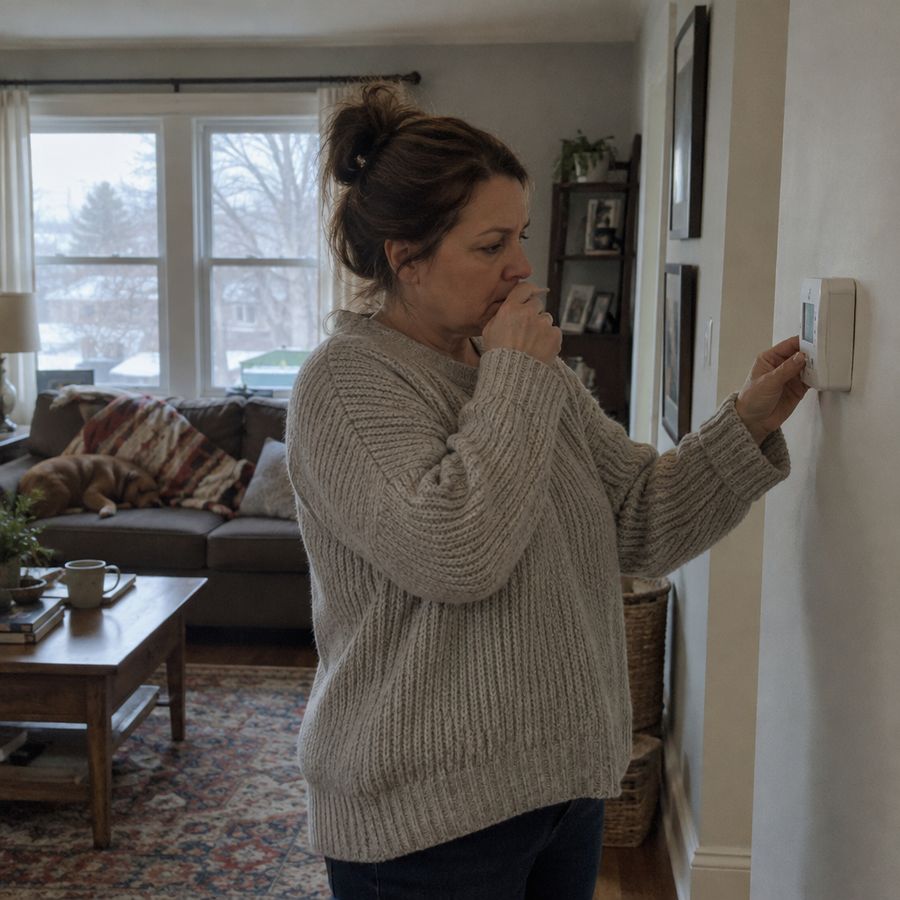
- Thermostat. Set it to Heat, raise it three or four degrees above room temperature, and put the fan on Auto. Replace the batteries if the display is faint.
- Furnace switch and breaker. Find the light-style switch near the furnace and make sure it is On. Check the breaker panel for a tripped circuit.
- Front panel. Make sure the lower door is seated firmly. A loose panel leaves the safety switch open and the furnace will not run.
- Filter. Slide it out and hold it to the light. If you cannot see through it, swap it for a clean one of the same size.
- Outside pipes. On high-efficiency furnaces, look at the white intake and exhaust pipes outside for frost, leaves or nests.
Pro tip: Before you power the furnace off, look through the small window on the lower panel and count the status light blinks. Turning the power off clears the code, and that code can save the technician real time.
What happens during a no-heat service visit?
Every provider has its own routine, but a thorough no-heat visit usually follows a pattern like this one.
- Questions first. The technician asks what you noticed, when it started, and whether anything changed recently, such as a new thermostat or filter.
- Read the fault code. They note the status light pattern and match it to the chart on the furnace door.
- Watch a call for heat. With the panel off and the safety switch held, they follow the start-up sequence and see where it stops.
- Test the suspect part. Using a meter, they confirm the failure with numbers rather than guesses.
- Explain and quote. You hear what failed, why, and the price before any repair starts. Ask the provider about parts availability if the furnace is older.
- Repair and retest. After the fix, the furnace runs through several cycles while the technician checks flame, temperature rise and venting.
If the visit turns up a deeper issue, such as a cracked heat exchanger, the conversation may shift toward replacement. A careful technician shows you what they found rather than just telling you.
What affects the cost of fixing a furnace that won't heat?
No-heat repairs range widely because the cause can be anything from a dirty sensor to a failed control board. The provider quotes after diagnosis, and these are the factors that shape that number.
| Factor | Why it matters |
|---|---|
| Which stage failed | Cleaning a flame sensor is quick. A gas valve, inducer or control board takes more labor and a more costly part. |
| Diagnosis time | An intermittent fault that only shows up on some cycles takes longer to catch than a part that is clearly dead. |
| Furnace access | A hallway closet or garage is easier to work in than a tight crawl space or attic platform. |
| Part availability | Common universal igniters are easy to source. Brand-specific boards for older models may need to be ordered. |
| Hidden secondary issues | An overheat trip often means an airflow problem too, which can add a second repair. |
When is a furnace that won't heat an emergency?
When is it an emergency?
A cold house becomes urgent when someone at home is very young, elderly or unwell, or when overnight temperatures put water pipes in a garage or crawl space at risk of freezing. It is a safety emergency right away if you smell gas, hear hissing near the gas line, or your carbon monoxide alarm sounds. In that case leave the house, call 911 or Puget Sound Energy from outside, and do not switch lights or appliances on or off on the way out.
For a plain no-heat problem without any of those warning signs, turn the furnace off at the switch if it keeps cycling, keep interior doors open so heat from any space heater spreads, and call to get a technician scheduled.
Why do no-heat calls pile up in Bellevue homes?
Bellevue sits on the Eastside between Lake Washington and Lake Sammamish, and its heating season is long rather than harsh. Furnaces run many hours over many months, so wear parts tend to fail in the middle of a damp stretch rather than in one big freeze. Mid-century houses in Lake Hills often have closet furnaces that have been through many winters, while townhomes and apartments around Crossroads tend to have tightly packed utility closets where filters and airflow cause trouble first.
Whatever the house, the approach stays the same. Find the stage where the sequence stops, prove the failed part with a meter, and fix the root cause. If you need furnace repair in Bellevue and the heat is off right now, a call is the quickest way to get someone looking at it.
Furnace not heating FAQs
Why does my furnace run but only blow cold air?
The blower is working but the burners are not lighting or not staying lit. A dirty flame sensor, a cracked igniter, a gas valve that will not open, or an overheat lockout are the usual reasons. Note whether you see any flame through the window before calling.
Why is the air lukewarm instead of hot?
Lukewarm air often means the burners are firing at low input, the filter is choking airflow, or ducts are leaking warm air into a crawl space or attic before it reaches the rooms. A technician can measure the temperature rise across the furnace to narrow it down.
Can I keep resetting the furnace to get heat?
One reset to see what happens is fine. Repeated resets hide the real fault, add wear to the igniter and inducer, and can lock the control board out for longer each time.
Do power outages cause a furnace to stop heating?
They can. A surge or brownout can trip the breaker, blow the low-voltage fuse on the control board, or leave a smart thermostat without power. Check the breaker and the thermostat display first, then call if the furnace stays dark.
Is it safe to use space heaters while I wait?
Electric space heaters with tip-over and overheat shutoff can bridge the gap. Keep them clear of curtains and bedding, plug them straight into the wall, and never use outdoor or gas-burning heaters indoors.
What should I tell the provider when I call?
Say whether the fan runs, whether the air is cold or lukewarm, what the thermostat shows, any blink code on the control board, and when the problem started. Those details help the technician bring the likely parts.
Related furnace services and areas
No-heat problems often overlap with other repairs. If your furnace lights but the flame looks wrong, see gas furnace repair. If the burners run but very little air reaches the rooms, the blower motor repair page covers airflow faults.